Can Strata Votes Be Done Online? Rules by State
Wednesday, 15 April 2026, 6:32 pm

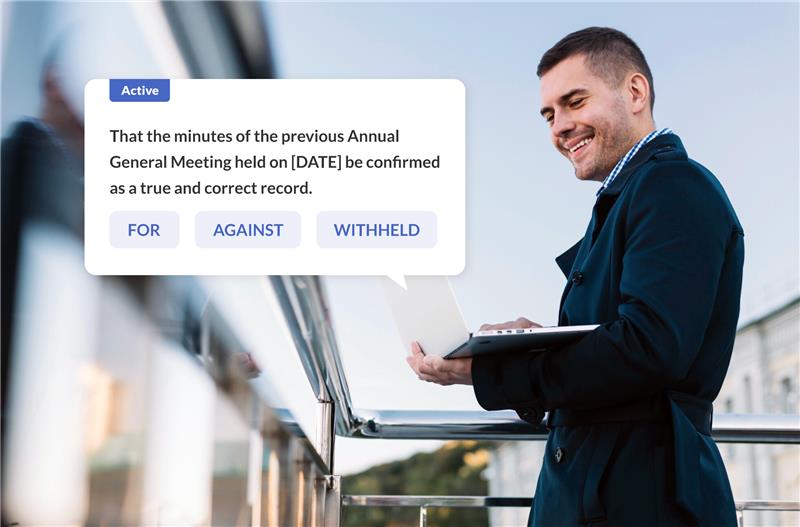
Short answer: yes, in most cases. Longer answer: it depends on where your scheme sits and how your by-laws or rules are set up.
Over the past few years, online voting has shifted from a “nice to have” to something most strata schemes expect. COVID accelerated it, but the legislative groundwork was already there in many states. The catch is that each jurisdiction has taken its own path. Some are quite flexible. Others still expect a few boxes to be ticked before you go fully digital.
If you’re a committee member or strata manager, the detail matters. Get it wrong and your resolution can be challenged. Get it right and meetings run cleaner, quorum is easier to achieve, and owners actually participate.
New South Wales — clear pathway for electronic voting
New South Wales is probably the most straightforward. The Strata Schemes Management Act 2015 (NSW) and its regulations explicitly allow for electronic voting, provided certain conditions are met.
Owners corporations can adopt electronic voting for general meetings, including AGMs. This typically requires:
Virtual meetings are also permitted. Attendance can be via video or teleconference, as long as everyone can participate in real time.
Email voting, on its own, is where people get caught out. Unless it’s structured as part of an approved electronic voting process, informal email replies don’t usually meet the legislative requirements.
Queensland — flexible, but still procedural
In Queensland, the Body Corporate and Community Management Act 1997 (QLD) supports remote participation and electronic voting, but it leans heavily on process.
Committees can vote outside meetings (often by email), but only if the process follows the regulation modules. That means:
General meetings can also be held virtually. Electronic voting is allowed, including pre-meeting voting (what Queensland calls “voting papers”). Postal voting is still widely used and remains valid.
Where schemes run into trouble is mixing informal email responses with formal voting. If it’s not issued and tracked correctly, it can be challenged.
Victoria — yes, but check your rules
Victoria allows electronic and remote voting under the Owners Corporations Act 2006 (VIC), but there’s a practical layer to consider: your own rules.
An owners corporation can conduct meetings via teleconference or video. Voting can be done electronically, but the method must be authorised — either in the rules or by resolution.
Postal ballots are also permitted and still common, especially for resolutions outside meetings.
One nuance in Victoria is record-keeping. If you’re using electronic voting, you need to be able to demonstrate how votes were cast and counted. Transparency matters more than the technology itself.
Source: Consumer Affairs Victoria – Meetings and committees
Western Australia — modernised, but structured
Western Australia updated its legislation more recently, and the Strata Titles Act 1985 (WA) now accommodates electronic voting and virtual meetings.
Schemes can:
As with other states, the key is that the process must be properly authorised and documented. WA is less prescriptive about the technology, but very clear about governance.
So, can everything be done online?
Almost. But not casually.
You can run AGMs online. You can collect votes electronically. Committees can make decisions without sitting in the same room. Postal ballots are still valid everywhere, and in some cases still preferred.
The dividing line is formality. A properly issued electronic vote is valid. A chain of email replies often isn’t.
How to enable online voting in your scheme
In practice, most schemes follow a similar path:
This is where providers like Vero Voting come in. The technology isn’t just about convenience — it’s about compliance. Every vote is tied to a lot, recorded securely, and exported in a format that stands up if questioned later.
That last part matters more than most people expect. Disputes tend to arise months after a meeting, not during it.
Proxy voting — still very much in play
Even with online voting, proxies haven’t gone anywhere.
Across all states, owners can appoint someone to vote on their behalf. But there are limits, and they differ:
Digital platforms can manage proxies alongside direct votes, which avoids the common issue of double voting or invalid forms.
Can strata managers vote on behalf of owners?
Sometimes — but carefully.
A strata manager can only vote if they’ve been validly appointed as a proxy. Even then, there may be restrictions depending on the state and the nature of the motion.
In NSW, for example, strata managers are restricted from acting as proxies in certain circumstances, particularly where there’s a potential conflict of interest.
This is one of those areas where good governance matters more than technical legality. Even if something is permitted, it doesn’t always pass the “should we be doing this?” test.
Final word
Online voting in strata isn’t a grey area anymore. The legislation across Australia broadly supports it — provided the process is sound.
If your scheme is still relying on paper or ad hoc email votes, it’s worth tightening things up. Not just for convenience, but to reduce risk.
If you want to move to a compliant online setup — or sense-check what you’re already doing — get in touch with Vero Voting. We’ll help you put a structure in place that works in your state and holds up when it matters.