Anonymous Voting Systems: Benefits, Risks, and When They Make Sense
Monday, 15 June 2026, 4:21 pm

Boards often ask the same question when a contentious vote is approaching:
“Should this be anonymous?”
Sometimes the request comes from members who are worried about backlash. Sometimes it comes from directors trying to encourage honest participation. Other times it appears after a difficult election, a disputed AGM, or growing tension within an organisation.
Anonymous voting can be a useful governance tool. It can also create problems if it is poorly designed or used in the wrong setting.
The real issue is not whether anonymous voting is good or bad. The question is whether it is appropriate for the decision being made, and whether the organisation can still demonstrate that the result is legitimate.
What is an anonymous voting system?
In practical terms, an anonymous voting system separates a person’s identity from their vote.
The organisation can usually verify that an individual is eligible to vote and has only voted once, but the voting record itself is not linked back to that person when results are counted.
This is different from many standard meeting votes where voting intentions may be visible through a show of hands, a recorded poll, or proxy disclosures.
Secret ballots have been part of Australian democratic and industrial voting systems for a very long time. In some areas, they are specifically required by legislation.
For example, elections conducted under the Fair Work (Registered Organisations) Act generally require direct voting elections to be conducted by secret postal ballot unless an exemption is granted. The Australian Electoral Commission regularly conducts these types of ballots for registered organisations.
That principle is familiar to most people. The challenge arises when organisations try to apply the same concept to AGMs, board elections, constitutional changes, committee elections, enterprise groups, clubs, strata bodies, or associations.
Why organisations choose anonymous voting
The strongest argument for anonymous voting is simple.
People tend to vote more honestly when they know their vote cannot be traced back to them.
That becomes particularly relevant where there is:
Many organisations underestimate how much social pressure exists inside their membership.
Members may publicly support a proposal while privately opposing it. Employees may feel uncomfortable voting against senior figures. Volunteers may avoid conflict altogether by not voting.
A properly managed anonymous ballot removes much of that pressure.
In our experience, participation can actually improve when members trust the process and believe they can express a genuine view without personal consequences.
The governance advantages
Anonymous voting is often associated with privacy, but its governance value goes further than that.
More genuine member sentiment
When voters are protected from scrutiny, the result is often a more accurate reflection of what members actually think.
This matters for boards.
A comfortable public vote does not necessarily mean there is genuine support behind a decision.
Anonymous voting can reveal concerns that would otherwise remain hidden.
Reduced intimidation and influence
Most organisations are not dealing with overt intimidation.
What they are dealing with is influence.
Long-serving directors, prominent members, senior executives, committee chairs, major shareholders, and respected industry figures naturally carry weight.
An anonymous process helps level the playing field.
Better handling of sensitive decisions
Certain decisions are particularly suited to secret voting.
Examples may include:
Where emotions are high, anonymity can help maintain relationships after the vote has concluded.
People can disagree without creating permanent divisions.
The risks that boards should understand
Anonymous voting is not automatically better governance.
In some circumstances it can create new problems.
Reduced accountability
One of the strongest criticisms of anonymous voting is that it can remove accountability from decision-making.
This is particularly relevant at board level.
Directors generally have fiduciary duties and collective responsibility. In many situations, director votes are recorded through board minutes rather than concealed.
A board that routinely adopts anonymous internal voting may undermine transparency and governance accountability.
There is a significant difference between anonymous member voting and anonymous director decision-making.
The two should not be treated as interchangeable.
Challenges when disputes arise
When a result is challenged, organisations need to demonstrate that the process was fair.
This becomes harder if voting records are poorly managed.
A legitimate anonymous system should still allow verification of:
Anonymity should not mean the organisation loses its ability to prove the outcome.
That distinction is often misunderstood.
Perceived lack of transparency
Some members become suspicious when they hear the word “anonymous”.
They worry that nobody can verify the result.
Others assume votes could be altered without detection.
Those concerns are usually caused by poor communication rather than the voting method itself.
Organisations need to explain how eligibility checks, audit trails, scrutineering, and result verification operate.
People do not need to see how individuals voted.
They do need confidence that the system worked properly.
Electronic anonymous voting: where things get complicated
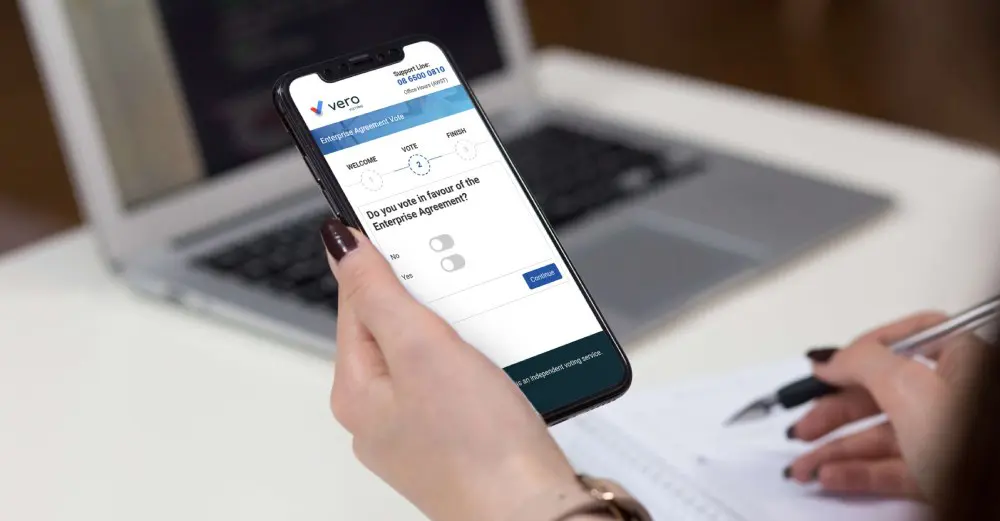
Electronic voting platforms have made anonymous voting much easier to administer.
They have also created new governance questions.
A well-designed electronic voting system can:
At the same time, technology introduces concerns around cybersecurity, access controls, authentication methods, and data handling.
Boards should ask practical questions.
Who can access the system?
Who can see voting records?
Can administrators view individual voting behaviour?
What audit evidence exists if the result is challenged?
These questions matter far more than marketing claims about a platform being “secure”.
The strongest systems are usually those that combine technology with independent oversight.
Why independent vote management matters
When a vote is contentious, perception matters almost as much as the result itself.
An election may be technically accurate yet still be disputed if members believe management controlled the process.
This is one reason many organisations appoint independent returning officers, scrutineers, or external vote managers.
An independent provider can separate administration from the outcome.
Members gain confidence that nobody with a vested interest controlled the ballot.
For unions and registered organisations, independent election management has long been embedded within Australia’s regulatory framework through Australian Electoral Commission involvement in many elections and ballots.
The same principle is increasingly being adopted by associations, clubs, companies limited by guarantee, professional bodies, and strata organisations.
Anonymous voting does not remove legal obligations
This point is worth stressing.
Even where voting is anonymous, organisations must still comply with their governing rules.
That includes:
For companies, voting procedures remain subject to the Corporations Act 2001 and the organisation’s constitution. Requirements around meetings, resolutions, proxies, record keeping, and voting validity still apply regardless of whether voting occurs electronically or anonymously.
A secret ballot cannot fix a defective process.
If the meeting itself is invalid, the voting method will not save it.
Where anonymous voting works best
Anonymous voting is generally most effective when the objective is to capture honest member sentiment without fear of pressure or retaliation.
That commonly includes:
It is less suitable where individual accountability is expected, particularly in board decision-making environments where directors are expected to stand behind their decisions.
Good governance depends on understanding the difference.
Anonymous Voting Systems
Frequently Asked Questions
Anonymous Voting Systems
Anonymous Voting Systems
Anonymous Voting Systems
Anonymous Voting Systems
Is anonymous voting the same as a secret ballot?
Usually, yes.
A secret ballot is designed so that an individual’s voting choice cannot be linked back to them during counting and reporting.
Can electronic voting be anonymous?
Yes, provided the system separates voter authentication from ballot records and includes appropriate controls and audit mechanisms.
Are anonymous votes legally valid in Australia?
They can be, provided the voting process complies with the relevant legislation, constitution, rules, and meeting requirements applying to the organisation.
Can scrutineers still verify an anonymous vote?
Yes.
A properly designed process allows scrutineers to verify the integrity of the election without identifying how individual voters cast their ballots.
Should every board election be anonymous?
Not necessarily.
The appropriate method depends on the organisation’s constitution, governance framework, member expectations, and the nature of the decision being made.
Final thoughts
Anonymous voting can strengthen trust, encourage honest participation, and reduce pressure on members. It can also create governance concerns if anonymity comes at the expense of transparency, accountability, or auditability.
The best voting systems strike a balance. Members should feel safe expressing their views, while the organisation remains able to demonstrate that the result is accurate, fair, and defensible.
For organisations considering anonymous electronic voting, election management, scrutineering, or independent ballot services, Vero Voting can help assess the right approach for your governance requirements and member expectations.
Sources
ASIC – Company Meetings and Resolutions
https://www.asic.gov.au/for-business-and-companies/companies/company-building-blocks/company-meetings-and-resolutions/
ASIC – Passing a Company Resolution (INFO 22)
https://asic.gov.au/for-business/changes-to-your-company/passing-a-company-resolution/
ASIC – Shareholder Rights and Responsibilities
https://www.asic.gov.au/for-business-and-companies/companies/company-share-and-shareholder-rules-and-changes/shareholder-rights-and-responsibilities/
Fair Work Commission – Elections
https://www.fwc.gov.au/registered-organisations/running-registered-organisation/elections
Fair Work Commission – The AEC, Voting Methods and Exemptions
https://www.fwc.gov.au/registered-organisations/running-registered-organisation/elections/aec-voting-methods-and
Fair Work Commission – The Election Process
https://www.fwc.gov.au/registered-organisations/running-registered-organisation/elections/election-process
Australian Electoral Commission – Industrial Elections Voting Systems
https://www.aec.gov.au/ieb/voting.htm
Corporations Act 2001 (Cth) s 249Y
https://www5.austlii.edu.au/au/legis/cth/consol_act/ca2001172/s249y.html
Fair Work (Registered Organisations) Act 2009 (Cth) s 144
https://classic.austlii.edu.au/au/legis/cth/consol_act/fwoa2009362/s144.html
Frequently Asked Questions
Is anonymous voting the same as a secret ballot?
Usually, yes.
A secret ballot is designed so that an individual’s voting choice cannot be linked back to them during counting and reporting.
Can electronic voting be anonymous?
Yes, provided the system separates voter authentication from ballot records and includes appropriate controls and audit mechanisms.
Are anonymous votes legally valid in Australia?
They can be, provided the voting process complies with the relevant legislation, constitution, rules, and meeting requirements applying to the organisation.
Can scrutineers still verify an anonymous vote?
Yes.
A properly designed process allows scrutineers to verify the integrity of the election without identifying how individual voters cast their ballots.
Should every board election be anonymous?
Not necessarily.
The appropriate method depends on the organisation’s constitution, governance framework, member expectations, and the nature of the decision being made.