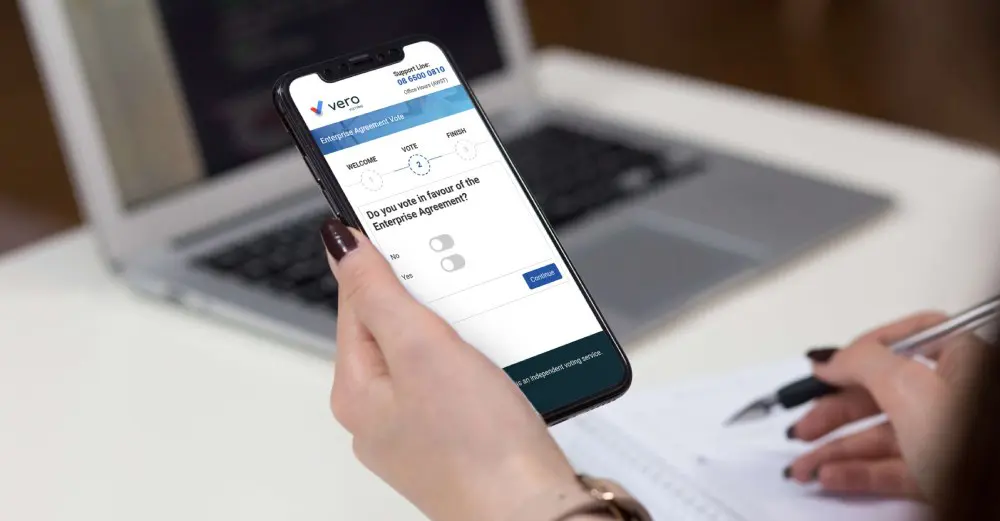
How Electronic Voting Works During AGMs
Friday, 5 June 2026, 10:09 am

For many organisations, AGM voting no longer happens with a raised hand and a count from the front of the room.
Members are increasingly attending meetings online, participating from different locations, or submitting votes before the meeting begins. Boards and governance teams are also under pressure to make meetings more accessible, more accurate, and easier to administer.
That has pushed electronic voting from a convenience to a standard part of AGM planning.
The technology itself is relatively straightforward. The real challenge is making sure the process remains transparent, legally compliant, and trusted by members.
Why AGMs Have Moved Towards Electronic Voting
The shift accelerated during COVID-19, but it did not disappear once restrictions ended.
Many organisations discovered that electronic voting increased participation. Members who would never travel to an AGM could suddenly attend, ask questions, appoint proxies, and vote from anywhere.
For listed companies, member-based organisations, clubs, associations, unions, strata schemes and not-for-profits, attendance rates often improved when technology removed geographic barriers.
The legal framework also evolved.
The Corporations Act now allows hybrid meetings for companies and registered schemes, and permits virtual-only meetings where the organisation’s constitution expressly allows it. Electronic communications and electronic voting have become part of normal governance practice rather than temporary measures.
That does not mean every electronic voting process is the same.
Different organisations use different methods depending on their constitution, governing legislation, membership structure and meeting format.
What Electronic Voting Actually Means
Electronic voting simply means votes are captured and counted using technology rather than paper ballots or manual counting.
During an AGM, this can happen in several ways:
In many modern AGMs, multiple methods operate together.
A member might submit a proxy appointment several days before the meeting, attend the AGM online, ask questions during debate, and then vote live when the chair opens a poll.
The technology records each action and applies voting entitlements automatically.
How the Voting Process Typically Works
While platforms differ, the workflow is usually consistent.
1. Member Verification
Before voting can occur, participants must be identified and validated.
This may involve:
The objective is simple: only eligible voters should be able to cast votes.
For organisations with weighted voting rights, unit entitlements or shareholdings, those entitlements are generally linked to the voter record before voting opens.
2. Proxy Processing
Proxy management is often where AGM administration becomes complicated.
Electronic systems can collect proxy appointments before the deadline and automatically apply those instructions during voting.
This reduces manual data entry and significantly lowers the risk of transcription errors.
For larger organisations, particularly companies limited by guarantee, associations and listed entities, electronic proxy processing can save many hours of administration immediately before a meeting.
3. Opening the Poll
When a motion is presented, the chair opens the poll.
Participants receive a voting interface showing the resolution and available voting options, typically:
The voting window remains open for a specified period before the poll closes.
For virtual and hybrid meetings, this allows all participants to vote simultaneously regardless of location.
4. Vote Collection and Counting
Once the poll closes, the system calculates results automatically.
Unlike a show of hands, electronic voting can accurately apply:
This becomes particularly important when voting rights differ between members.
Why Poll Voting Matters
One of the biggest misunderstandings around AGM voting is the difference between a show of hands and a poll.
A show of hands gives each attendee one vote regardless of their underlying entitlement.
A poll counts votes according to the voting rights attached to each member, shareholder, lot owner or representative.
For many organisations, a poll is the only practical way to ensure voting results accurately reflect member entitlements.
ASIC has consistently emphasised that voting in virtual and hybrid meetings should allow members to participate effectively and cast votes during the meeting. During the transition to modern meeting formats, ASIC also highlighted the importance of poll voting over show-of-hands voting in virtual environments.
In practice, electronic voting platforms are designed around poll voting because they can calculate entitlements automatically.
What Happens During Hybrid and Virtual AGMs?
Hybrid meetings have become one of the most popular formats across Australia.
Members can attend in person or participate remotely using meeting technology.
From a voting perspective, everyone should have a comparable opportunity to participate.
That means online attendees should be able to:
The technology should support participation, not create a second-class experience for remote attendees.
ASIC’s guidance is clear that members attending through virtual meeting technology should be given a reasonable opportunity to participate, ask questions and vote.
Poorly implemented technology creates problems quickly.
If members cannot access the voting system, receive links late, experience authentication issues, or lose access during voting, confidence in the process can disappear regardless of whether the final result is correct.
The Role of Independent Vote Management
When elections are contested or resolutions are sensitive, independence becomes just as important as technology.
Many organisations choose to engage an independent provider to manage:
This creates separation between the organisation conducting the meeting and the organisation managing the vote.
For boards, that separation can be valuable.
If results are challenged later, there is a clear audit trail showing how votes were collected, validated and counted.
Security and Audit Trails
Members often ask whether electronic voting is secure.
The better question is whether the process is auditable.
A properly managed electronic voting system should provide:
Good governance relies on transparency.
When organisations can demonstrate exactly how a result was produced, disputes become much easier to address.
Common AGM Voting Mistakes
Most voting problems are not technology failures.
They are planning failures.
Common examples include:
The organisations that run smooth AGMs usually spend more time preparing members than they do configuring the software.
How Electronic Voting Works During AGMs
Frequently Asked Questions
How Electronic Voting Works During AGMs
Can members vote before an AGM and still attend?
How Electronic Voting Works During AGMs
Usually yes.
The specific rules depend on the organisation’s governing documents and voting procedures, but many electronic voting systems support pre-meeting voting while still allowing attendance at the AGM.
Are virtual-only AGMs allowed in Australia?
For companies and registered schemes governed by the Corporations Act, virtual-only meetings are generally permitted only where the constitution expressly allows them. Hybrid meetings are permitted without requiring a constitutional amendment.
Is electronic voting legally valid?
Yes, provided the organisation complies with its governing legislation, constitution, meeting rules and voting requirements. Electronic voting is now widely used across Australian corporate, association and member-based sectors.
Can proxy votes be managed electronically?
Yes. Electronic proxy appointment and processing are common features of modern AGM voting systems and can significantly reduce manual administration.
Final Thoughts
Electronic voting is no longer a niche AGM feature. For many organisations, it has become the most practical way to support member participation while maintaining accuracy and transparency.
The technology itself is only part of the equation. Successful AGM voting depends on clear governance processes, reliable administration, proper member communication and confidence in the result.
Where organisations need support with AGM voting, proxy management, independent scrutineering or hybrid meeting technology, the team at Vero Voting can help design a process that suits both the legal requirements and the expectations of members.
Sources
ASIC – FAQs: Virtual meetings for companies and registered schemes: https://asic.gov.au/regulatory-resources/corporate-governance/shareholder-engagement/faqs-virtual-meetings-for-companies-and-registered-schemes/
ASIC – What companies and registered schemes should know about virtual-only meetings: https://asic.gov.au/about-asic/news-centre/news-items/what-companies-and-registered-schemes-should-know-about-virtual-only-meetings/
ASIC – ASIC allows additional time for holding virtual-only meetings: https://asic.gov.au/about-asic/news-centre/find-a-media-release/2022-releases/22-035mr-asic-allows-additional-time-for-holding-virtual-only-meetings/
Corporations Act 2001 (Cth)
Corporations Amendment (Meetings and Documents) Act 2022 (Cth)
Frequently Asked Questions
Can members vote before an AGM and still attend?
Usually yes.
The specific rules depend on the organisation’s governing documents and voting procedures, but many electronic voting systems support pre-meeting voting while still allowing attendance at the AGM.
Are virtual-only AGMs allowed in Australia?
For companies and registered schemes governed by the Corporations Act, virtual-only meetings are generally permitted only where the constitution expressly allows them. Hybrid meetings are permitted without requiring a constitutional amendment.
Is electronic voting legally valid?
Yes, provided the organisation complies with its governing legislation, constitution, meeting rules and voting requirements. Electronic voting is now widely used across Australian corporate, association and member-based sectors.
Can proxy votes be managed electronically?
Yes. Electronic proxy appointment and processing are common features of modern AGM voting systems and can significantly reduce manual administration.