Proxy Voting Under the Corporations Act — What You Need to Know
Thursday, 9 April 2026, 7:33 am

Proxy voting is one of those things that looks routine… right up until it isn’t.
Most meetings run smoothly. Then you hit one where a proxy’s been submitted late, or the form doesn’t quite line up with the Act, and suddenly you’re dealing with objections mid-meeting. Not ideal.
Under the Corporations Act 2001 (Cth), proxy voting is a defined legal right. It’s not just administrative process — it’s part of how members exercise control over company decisions.
The sections that actually matter
You don’t need to memorise the Act, but a few provisions come up again and again.
If you’ve been around AGMs long enough, you start recognising where these show up in practice. Usually when something hasn’t been handled properly.
Full Act here if you want to check wording directly:
https://www.legislation.gov.au/Series/C2004A00818
Proxy forms — where things quietly go wrong
Most issues I see don’t come from big compliance failures. They come from small oversights in the proxy form itself.
At a minimum, the notice of meeting needs to make it clear that:
For listed companies, it gets more prescriptive. You need to allow shareholders to direct how their proxy votes on each resolution — and explain what happens if they don’t.
That last point matters more than people think. If it’s not clear, it opens the door to disputes later.
ASIC has a practical overview worth reviewing before sending anything out
Deadlines — no wiggle room here
This is probably the most common pressure point.
The Act sets a default rule: proxy documents must be received at least 48 hours before the meeting.
There’s a bit of flexibility in theory — a constitution can shorten that timeframe — but in practice, most companies stick with 48 hours.
What’s important is this: once that deadline passes, you can’t just “accept one more”. It might feel reasonable at the time. It’s not compliant.
And if the vote is close, that decision can come back to bite.
Can someone cancel their proxy?
Yes, but it has to be clear.
A proxy can be overridden or revoked if:
There’s also a quirk people often miss: if the company hasn’t been told about a revocation before the meeting starts, a proxy vote can still stand.
That’s why record-keeping matters. If something is challenged later, you need a clean paper trail.
Online and hybrid meetings — proxies haven’t gone anywhere
Even with virtual and hybrid meetings now common, proxy voting is still very much part of the process.
The Australian Securities and Investments Commission expects companies to ensure members have a reasonable opportunity to participate — including voting effectively.
Electronic proxy submissions are allowed under the Act, even if the constitution doesn’t specifically mention them.
In practice, many shareholders still prefer lodging a proxy ahead of time rather than relying on live voting. That hasn’t really changed.
What happens if you slip up?
Usually it’s not dramatic. But it can be.
If proxy rules aren’t followed properly, you can end up with:
And none of that tends to be quick or cheap.
A practical observation
The companies that avoid issues here don’t necessarily do anything fancy.
They tend to:
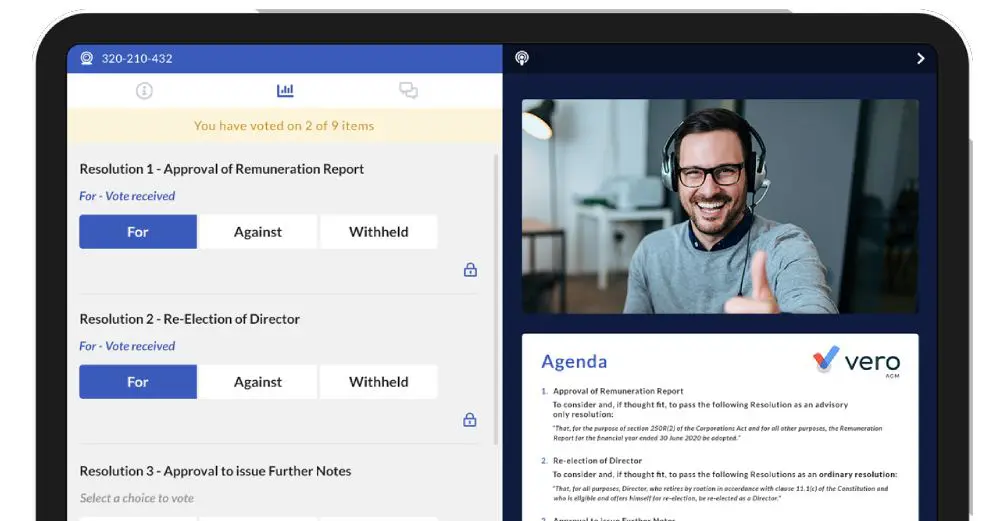
That last point is where digital platforms — including what we run at Vero Voting — tend to make a difference. Not because they’re complex, but because they remove ambiguity.
Final thought
Proxy voting isn’t complicated, but it is precise. And precision is what keeps meetings defensible if anyone decides to take a closer look.
If you’ve got an AGM coming up, it’s worth reviewing your proxy process now — while there’s still time to fix things properly. If you’d like a second opinion or just want to sanity-check your setup, feel free to get in touch.