AGM vs General Meeting: Understanding the Key Differences
Tuesday, 28 July 2026, 1:51 pm

After years working with committees, company secretaries and boards across Australia, I’ve seen plenty of confusion around meetings. People often use “general meeting” and “AGM” interchangeably, but they serve quite different purposes. Getting this right matters more than you might think—especially when compliance, member trust and smooth decision-making are on the line.
What Is a General Meeting?
A general meeting is any formal gathering of an organisation’s members where key decisions can be made. It covers a broad category that includes everything from routine updates to urgent matters that need member approval.
In practice, general meetings give members a voice in the organisation’s direction. They might cover changes to rules, major financial decisions, or specific issues that arise between scheduled events. For incorporated associations, strata schemes, unions and companies, these meetings follow procedures set out in the constitution or governing rules, plus relevant legislation.
What Makes an AGM Different?
An Annual General Meeting (AGM) is a specific type of general meeting that happens once a year. It’s the organisation’s accountability moment—the time when the board or committee reports back to members on the past year’s activities and finances.
Key features of an AGM typically include:
Public companies have strict requirements under the Corporations Act. Most must hold an AGM within five months of the end of their financial year. Incorporated associations follow state or territory rules, usually requiring the AGM within 5-6 months after financial year-end, depending on the jurisdiction.
Why the Distinction Matters
The AGM isn’t just another meeting—it’s a governance cornerstone. It builds transparency and member engagement. Skipping proper process here can lead to disputes, compliance issues or loss of trust.
A regular general meeting (sometimes called a special general meeting or SGM) is usually called for a focused purpose: approving a rule change, dealing with an urgent matter, or addressing something that genuinely can’t wait until the next AGM. Calling too many can fatigue members; calling too few might leave important issues unresolved.
Real-world observation: In strata schemes, the AGM often sets the budget and levies for the year ahead. An extra general meeting might be needed for a major repair project that emerges mid-year. Mixing up the two can create procedural headaches down the track.
Common Pitfalls to Avoid
From what I’ve seen:
Many organisations also overlook how technology can improve participation without cutting corners on compliance.
Best Practices for Running Effective Meetings
Whether it’s an AGM or another general meeting, preparation makes all the difference:
Electronic voting and secure online platforms have made a big difference here, particularly for organisations with dispersed members or complex ballots.
How Vero Voting Supports Better Governance
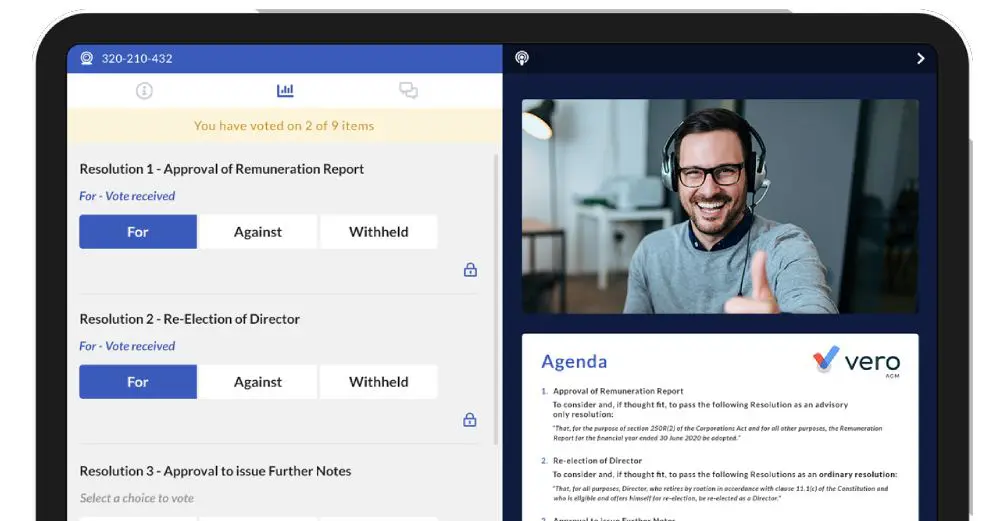
At Vero Voting, we work with many Australian organisations on the voting side of these meetings. Whether it’s managing proxy votes, running secure electronic ballots during an AGM, or supporting a special general meeting with confidential resolutions, the focus is always on accuracy, auditability and ease for both administrators and members.
This kind of support lets committees focus on the substance of governance rather than wrestling with manual vote counting or compliance risks.
Key Takeaways
Getting the mechanics right frees you up to focus on what really counts: running your organisation effectively and keeping members engaged.
If your next AGM or general meeting feels more complicated than it should, or you’re looking at options for electronic voting and better member participation, we’re happy to share what we’ve learned from supporting dozens of organisations.
FAQ
AGM vs General Meeting
AGM vs General Meeting
AGM vs General Meeting
AGM vs General Meeting
What is the main difference between an AGM and a general meeting? An AGM is a mandatory annual meeting with standard business like financial reports and elections. A general meeting is a broader term for any member meeting, often called for specific or urgent matters outside the annual cycle.
Do all Australian organisations need to hold an AGM? No. Public companies generally do under the Corporations Act. Proprietary companies usually don’t unless required by their constitution. Incorporated associations, strata schemes and many not-for-profits must hold one under relevant state/territory rules or their governing documents.
Can a general meeting replace an AGM? No. The AGM has specific purposes and timing requirements that a regular general meeting doesn’t satisfy.
How much notice is needed for an AGM in Australia? It varies. Many public companies require at least 21 days (28 for some listed entities). Always check your constitution and applicable legislation.
Can voting at AGMs or general meetings be done electronically? Yes, in many cases—provided it complies with your rules and legislation. Secure platforms can handle proxies, live voting and pre-meeting votes while maintaining a clear audit trail.
Sources
Australian Securities and Investments Commission (ASIC) resources on company meetings
Frequently Asked Questions
What is the main difference between an AGM and a general meeting?
An AGM is a mandatory annual meeting with standard business like financial reports and elections. A general meeting is a broader term for any member meeting, often called for specific or urgent matters outside the annual cycle.
Do all Australian organisations need to hold an AGM?
No. Public companies generally do under the Corporations Act. Proprietary companies usually don’t unless required by their constitution. Incorporated associations, strata schemes and many not-for-profits must hold one under relevant state/territory rules or their governing documents.
Can a general meeting replace an AGM?
No. The AGM has specific purposes and timing requirements that a regular general meeting doesn’t satisfy.
How much notice is needed for an AGM in Australia?
It varies. Many public companies require at least 21 days (28 for some listed entities). Always check your constitution and applicable legislation.
Can voting at AGMs or general meetings be done electronically?
Yes, in many cases—provided it complies with your rules and legislation. Secure platforms can handle proxies, live voting and pre-meeting votes while maintaining a clear audit trail.