AGM Voting Software vs Zoom Polls: What’s the Difference?
Wednesday, 29 July 2026, 3:51 pm

Many organisations already use Zoom to host Annual General Meetings (AGMs), committee meetings and member briefings. It’s familiar, easy to join, and works well for presentations and discussions.
A common question follows:
“If we’re already using Zoom, can’t we just use its Poll feature for voting?”
It’s a reasonable question—but the answer depends on what you’re trying to achieve.
For informal feedback during a meeting, Zoom Polls can be perfectly adequate.
For formal AGM resolutions, director elections, constitutional amendments or weighted member voting, the requirements are very different. Australian organisations typically need more than simply collecting responses from meeting attendees. They need confidence that every eligible vote is counted correctly, recorded securely and can be verified afterwards.
This article explains the differences between Zoom Polls and dedicated AGM voting software, helping you choose the right approach for your organisation.
What Is Zoom Polls?
Zoom Polls is a built-in meeting feature that allows hosts to ask participants multiple-choice questions, rating-scale questions, short-answer questions and quizzes.
It’s designed primarily for:
During a meeting, participants submit responses, and the host can display results immediately or afterwards.
For many business meetings, that’s exactly what’s needed.
Formal governance, however, is another matter.
What Is AGM Voting Software?
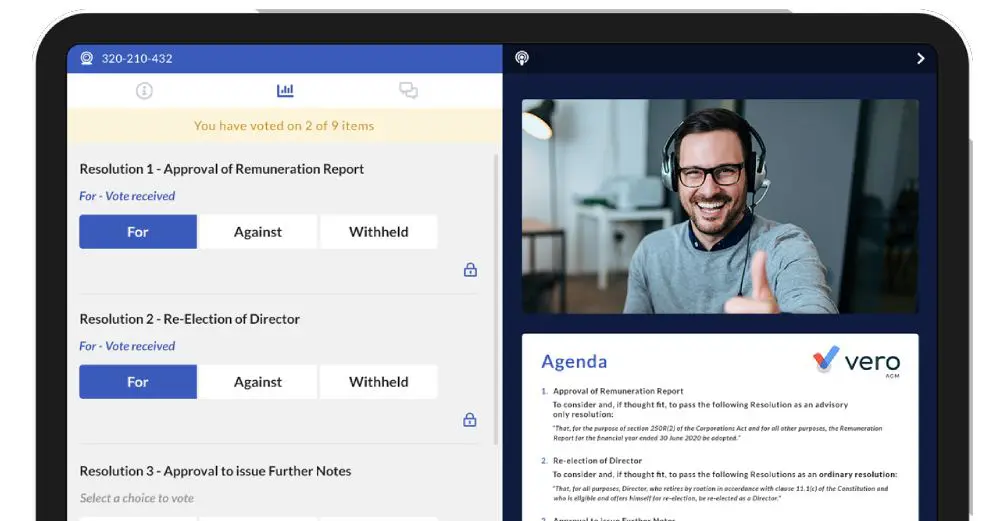
AGM voting software is purpose-built to manage formal organisational voting.
Rather than simply collecting answers, it manages the entire voting process, including:
The focus is governance rather than audience engagement.
Why Formal AGMs Have Different Requirements
Australian organisations often operate under legislation, constitutions or governing rules that specify how votes must be conducted.
Depending on the organisation, these requirements may include:
For companies, meeting requirements are governed by the Corporations Act 2001 and administered by the Australian Securities and Investments Commission (ASIC). Strata schemes, incorporated associations, unions and not-for-profit organisations may also be subject to state or territory legislation and their own governing documents.
While electronic voting is increasingly accepted, organisations are still responsible for ensuring the process complies with the relevant legislation and their constitution.
Comparing Zoom Polls and AGM Voting Software
| Feature | Zoom Polls | Dedicated AGM Voting Software |
|—|—|—|
| **Multiple-choice voting** | ✓ | ✓ |
| **Verify eligible voters** | Limited | ✓ |
| **Weighted voting** | ✗ | ✓ |
| **Proxy voting support** | ✗ | ✓ |
| **Secret ballots** | Limited | ✓ |
| **Formal motion management** | ✗ | ✓ |
| **Director elections** | Limited | ✓ |
| **Quorum management** | ✗ | ✓ |
| **Detailed audit trail** | Limited | ✓ |
| **Downloadable official reports** | Basic | ✓ |
| **Suitable for governance compliance** | Not designed for this | Yes |
The biggest difference is intent.
Zoom Polls was created for engagement.
AGM voting software was created for governance.
Where Zoom Polls Works Well
Zoom Polls can be an excellent choice when you’re collecting opinions rather than making legally significant decisions.
Examples include:
These situations generally don’t require formal voter verification or permanent governance records.
Where Zoom Polls May Fall Short
Problems arise when organisations attempt to use Zoom Polls as their official voting system.
Some common challenges include:
Verifying Who Is Actually Voting
Attendance doesn’t necessarily equal voting eligibility. Members may join using different names, shared devices or personal email addresses, making verification difficult without additional processes.
Managing Proxy Votes
Many constitutions allow proxy voting. Zoom Polls doesn’t manage proxy appointments or automatically apply proxy voting rights during the poll.
Weighted Voting
Some organisations allocate different voting weights to different members, lots, shareholdings or delegates. Zoom Polls treats participants equally and doesn’t support complex voting weight calculations.
Secret Ballots
Although Zoom offers anonymous polling options, anonymous responses alone don’t necessarily satisfy governance requirements where eligibility must also be verified while preserving ballot secrecy. Dedicated voting platforms separate voter authentication from vote storage to maintain both security and confidentiality.
Audit Requirements
If a voting result is questioned months later, organisations may need detailed records showing:
Dedicated AGM software is built with this level of reporting in mind.
Can You Use Zoom and AGM Voting Software Together?
Absolutely.
In fact, this has become one of the most common approaches for hybrid and virtual AGMs.
A typical workflow looks like this:
This combines Zoom’s strengths for communication with specialised voting software designed for governance.
Common Misconceptions
“Zoom Polls are anonymous, so they’re compliant.”
Anonymous voting is only one aspect of governance. Many organisations must also verify voter eligibility, apply proxy rules and maintain auditable records.
“Everyone attending can simply vote.”
Attendance and voting entitlement aren’t always the same. Some attendees may be observers, guests or advisers without voting rights.
“We’ll just export the poll results.”
Basic poll summaries rarely provide the level of documentation needed for governance records or dispute resolution.
Best Practices for Online AGM Voting
If you’re planning a virtual or hybrid AGM, consider these practical steps:
A little preparation helps avoid confusion during the meeting and reduces the risk of disputed outcomes afterwards.
How Vero Voting Can Help
For organisations conducting formal AGMs, elections or member ballots, Vero Voting provides a platform designed specifically for governance rather than audience interaction.
Features include:
Many organisations continue using Zoom for presentations while relying on Vero Voting to manage the voting itself. This approach allows each platform to do what it was designed for.
Key Takeaways
If you’re planning an upcoming AGM and aren’t sure which approach best suits your organisation, the team at Vero Voting is happy to discuss your requirements and demonstrate how a dedicated voting platform can simplify the process.
AGM Voting Software vs Zoom Polls
AGM Voting Software vs Zoom Polls
AGM Voting Software vs Zoom Polls
FAQ
Can Zoom Polls be used for an AGM?
Yes, Zoom Polls can be used to gather opinions or conduct informal votes during an AGM. However, organisations should carefully consider whether the feature meets their legal obligations, constitution and governance requirements before using it for formal resolutions or elections.
Is Zoom Polls suitable for director elections?
Generally, no. Director elections often require verified voter eligibility, secure ballots, accurate reporting and audit records that dedicated AGM voting software is designed to provide.
Does Zoom Polls support proxy voting?
No. Zoom Polls does not manage proxy appointments or automatically apply proxy voting rights during polling.
Can AGM voting software work alongside Zoom?
Yes. Many organisations use Zoom to host the meeting while members cast official votes through a dedicated AGM voting platform.
What should I look for in AGM voting software?
Look for features such as voter authentication, weighted voting, proxy management, secret ballots, audit trails, detailed reporting, secure vote collection and support for Australian governance requirements.
Sources
Frequently Asked Questions
Can Zoom Polls be used for an AGM?
Yes, Zoom Polls can be used to gather opinions or conduct informal votes during an AGM. However, organisations should carefully consider whether the feature meets their legal obligations, constitution and governance requirements before using it for formal resolutions or elections.
Is Zoom Polls suitable for director elections?
Generally, no. Director elections often require verified voter eligibility, secure ballots, accurate reporting and audit records that dedicated AGM voting software is designed to provide.
Does Zoom Polls support proxy voting?
No. Zoom Polls does not manage proxy appointments or automatically apply proxy voting rights during polling.
Can AGM voting software work alongside Zoom?
Yes. Many organisations use Zoom to host the meeting while members cast official votes through a dedicated AGM voting platform.
What should I look for in AGM voting software?
Look for features such as voter authentication, weighted voting, proxy management, secret ballots, audit trails, detailed reporting, secure vote collection and support for Australian governance requirements.