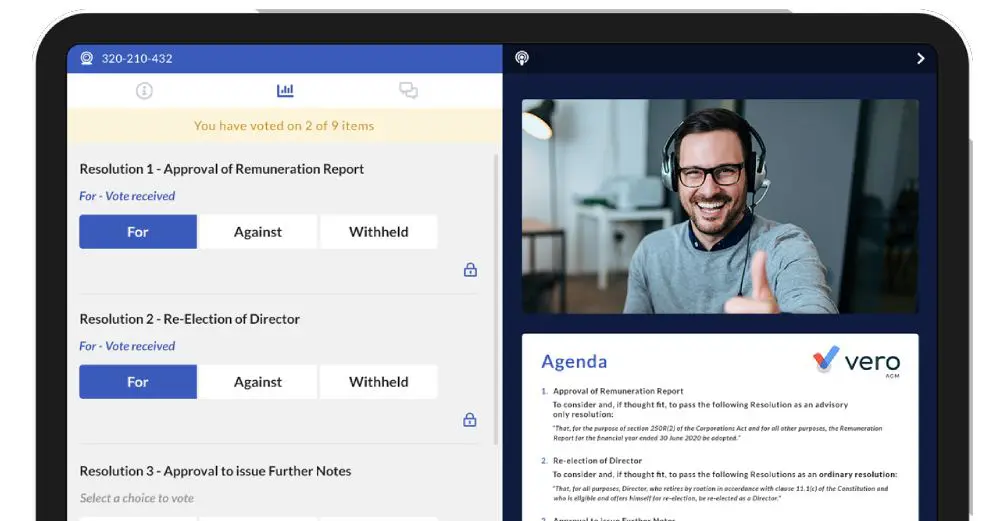
Questions to Ask Before Choosing an Online Voting Provider
Tuesday, 15 September 2026, 9:35 am

Choosing an online voting provider is not simply a technology decision. It is a governance decision.
When an organisation runs an AGM, board election, committee vote, member ballot or workplace agreement vote, the outcome needs to be trusted by everyone involved — candidates, voters, administrators and regulators.
A voting platform may look impressive during a demonstration, but the real questions usually sit behind the interface:
These questions matter because voting is ultimately about confidence. A fast result is useful, but a result that members do not trust creates bigger problems.
Australian organisations are increasingly using digital voting solutions to improve participation and simplify administration. However, choosing the right provider requires more than comparing features and pricing.
The right online voting provider should support good governance, transparency and accountability from the moment a ballot opens until the final result is declared.
Why Choosing the Right Online Voting Provider Matters
Voting systems are often used during some of an organisation’s most important decisions.
Examples include:
A voting error can create reputational damage, delays and disputes.
For companies and registered schemes, ASIC highlights that meetings using technology must still provide members with a reasonable opportunity to participate. Virtual participation does not remove governance obligations — it changes how those obligations are delivered.
For listed entities, ASX guidance also recognises the importance of reliable voting processes, including appropriate handling of voting processes, exclusions and result reporting.
The platform you select becomes part of your governance framework.
1. How Secure Is the Online Voting Platform?
Security should be the first question, not the last.
A voting provider is handling sensitive information, including:
What security certifications do you hold?
Look for independently verified security standards rather than relying only on marketing claims.
Examples include:
A provider should be able to explain how security controls are maintained, reviewed and improved.
Where is voting data stored?
Australian organisations should understand:
Data sovereignty is becoming an increasingly important consideration, particularly for organisations handling member and shareholder information.
How do you protect against unauthorised access?
Ask about:
The Australian Privacy Principles require organisations covered by the Privacy Act to take reasonable steps to protect personal information from misuse, interference, loss and unauthorised access.
2. Does the Provider Create a Reliable Audit Trail?
A trustworthy election needs more than a final result.
It needs evidence.
Ask:
“If someone challenges the result six months later, what records are available?”
A professional online voting system should provide an audit trail showing important events such as:
The goal is not to expose individual votes. The goal is to demonstrate that the election process was conducted correctly.
A strong audit trail helps organisations respond confidently to questions from:
3. How Does the Provider Protect Voter Privacy?
A common concern is balancing transparency with confidentiality.
A voter should be able to prove they participated without allowing others to discover how they voted.
Ask:
A good system verifies that an eligible person has voted while protecting the confidentiality of their choice.
This is especially important for:
Trust disappears quickly if voters believe their choices can be traced.
4. How Are Voters Verified?
Not every election requires the same level of authentication.
A small community association election may have different requirements from an ASX-listed company shareholder vote.
Ask the provider:
Common authentication approaches include:
The authentication method should match the risk level of the election.
5. Does the System Support Your Voting Rules?
A voting platform should adapt to your governance requirements, not force your organisation into a standard template.
Ask whether the system supports:
Different organisations have different rules.
For example:
A strata committee election may require different settings from a shareholder resolution.
A union ballot may have different requirements from a not-for-profit board election.
The provider should understand governance processes, not just software.
6. Can the Provider Support AGMs and Hybrid Meetings?
Many organisations now combine physical meetings with online participation.
A voting platform should work alongside your meeting process.
Ask:
ASIC notes that virtual and hybrid meetings should provide members with meaningful opportunities to participate, including asking questions and engaging with meeting processes.
Voting technology should improve participation, not create another barrier.
7. What Happens If Something Goes Wrong?
Every election needs a contingency plan.
Ask:
A provider’s quality is often demonstrated when something unexpected happens.
A reliable provider should have clear procedures for:
8. Does the Provider Understand Australian Governance?
A voting provider should understand the environment in which Australian organisations operate.
Ask whether they have experience with:
Australian governance is not simply about counting votes. It involves:
A provider familiar with Australian governance requirements can help avoid problems before they occur.
9. Can You Demonstrate the Election Was Fair?
A strong online voting provider helps organisations answer:
“How do we know the result is correct?”
Look for features such as:
The result should be understandable and defensible.
Common Mistakes When Selecting an Online Voting Provider
Choosing Based Only on Price
The cheapest option may not provide the governance controls required for a serious election.
A voting platform is protecting the integrity of a decision-making process.
Assuming All Online Voting Systems Are the Same
Two platforms may both allow voters to click a button, but their security, auditability and governance features can be completely different.
Ignoring Data Security
Voting data is sensitive information.
Security should be assessed before signing a contract, not after an incident occurs.
Failing to Test the Voter Experience
A secure platform still needs to be easy for members to use.
Poor usability can reduce participation and increase support requests.
How Vero Voting Helps Organisations Run Trusted Elections
The platform is designed around the practical requirements organisations face:
Vero Voting is certified to ISO/IEC 27001:2022 for its Information Security Management System (ISMS) and independently audited under SOC 2 Type II, supporting organisations that require strong information security controls when managing important votes.
For organisations comparing online voting providers, the key question is not simply:
“Can this system count votes?”
It is:
“Can this system help us prove the vote was secure, accurate and trusted?”
Key Takeaways
Before selecting an online voting provider, ask:
A reliable voting provider should make governance easier, not create uncertainty.
If your organisation is planning an AGM, election or member ballot, Vero Voting can help you assess the right approach and demonstrate how a secure online voting process works.
Questions to Ask Before Choosing an Online Voting Provider
Questions to Ask Before Choosing an Online Voting Provider
Questions to Ask Before Choosing an Online Voting Provider
FAQ Section
What should I look for in an online voting provider?
Look for security certifications, strong voter authentication, audit trails, ballot privacy controls, Australian data handling practices and experience supporting governance elections.
Are online voting systems secure?
Online voting security depends on the provider’s controls. Organisations should assess encryption, authentication, audit logging, independent security testing and operational processes before selecting a platform.
Can online voting be used for AGMs in Australia?
Yes. Many organisations use online voting as part of AGM processes, including hybrid meetings. The voting process must still support appropriate member participation and governance requirements.
How do online voting providers prevent duplicate voting?
Most systems use voter authentication methods such as unique credentials, member identifiers or controlled access links to ensure eligible voters can participate only once.
Should voting data be stored in Australia?
Australian organisations should understand where their voting data is stored and processed. Data location, security controls and privacy obligations should form part of the provider selection process.
Sources
Frequently Asked Questions
What should I look for in an online voting provider?
Look for security certifications, strong voter authentication, audit trails, ballot privacy controls, Australian data handling practices and experience supporting governance elections.
Are online voting systems secure?
Online voting security depends on the provider’s controls. Organisations should assess encryption, authentication, audit logging, independent security testing and operational processes before selecting a platform.
Can online voting be used for AGMs in Australia?
Yes. Many organisations use online voting as part of AGM processes, including hybrid meetings. The voting process must still support appropriate member participation and governance requirements.
How do online voting providers prevent duplicate voting?
Most systems use voter authentication methods such as unique credentials, member identifiers or controlled access links to ensure eligible voters can participate only once.
Should voting data be stored in Australia?
Australian organisations should understand where their voting data is stored and processed. Data location, security controls and privacy obligations should form part of the provider selection process.