What is Weighted Voting? Strata & Corporate Explained
Wednesday, 6 May 2026, 5:35 pm
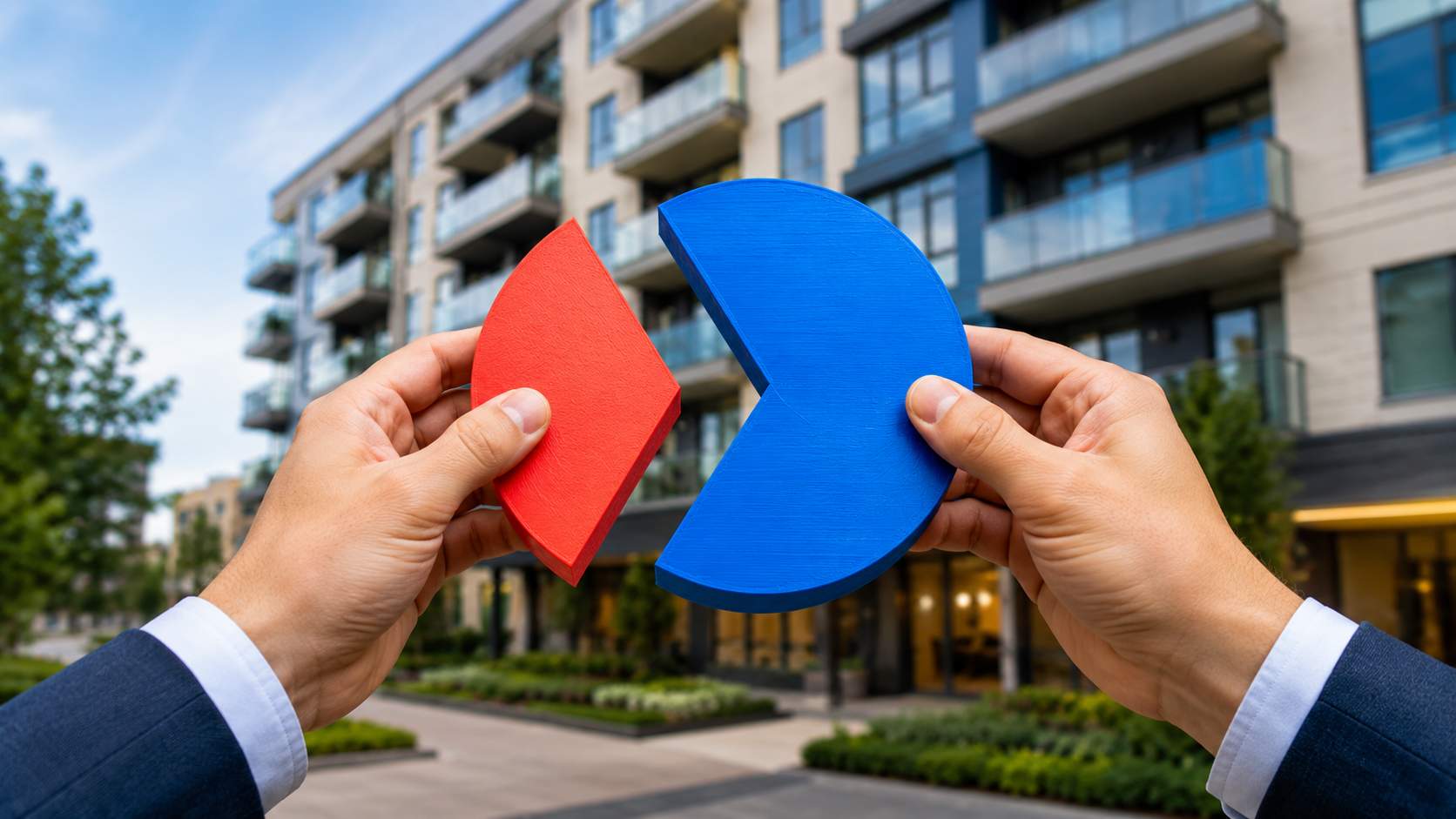
If you’ve ever sat through a strata meeting and wondered why one owner seems to have more influence than another, you’re not imagining it.
In Australian strata voting, not every vote is equal.
Some owners hold multiple lots. Others hold larger unit entitlements. And depending on the type of motion being voted on, those numbers can significantly change the outcome.
That’s where weighted voting comes in.
For strata managers, committees, and governance professionals, understanding how voting weights work is essential — especially now that more meetings are moving online and owners expect transparent, accurate results.
The Difference Between “Votes” and “Weight”
One of the biggest misconceptions in strata is assuming voting always works as “one person = one vote”.
Sometimes it does. Sometimes it absolutely does not.
In practice, strata voting can involve two separate layers:
Those two things are related, but they are not the same.
For example:
That distinction matters because different motions can use different voting methods.
Under NSW strata legislation, some decisions are counted as a simple majority based on one vote per lot, while others are determined by unit entitlement.
(NSW Government)
What are Unit Entitlements?
Unit entitlements are numerical values assigned to each lot when a strata scheme is created.
Generally speaking:
The NSW Government describes unit entitlement as representing an owner’s share of the strata scheme.
(NSW Government)
A simple example:
| Lot | Units Owned | Unit Entitlement |
|---|---|---|
| Owner A | 1 | 10 |
| Owner B | 2 | 25 |
| Owner C | 1 Penthouse | 40 |
At first glance, there are four lots in total.
But when a motion is decided by unit entitlement, the penthouse owner effectively carries far greater voting weight than a smaller apartment owner.
That can surprise people during AGMs. Especially in mixed developments where commercial lots or penthouses hold substantial entitlements.
When Does Strata Use Weighted Voting?
Different resolutions use different rules.
In NSW strata schemes:
The practical effect is that a motion may appear to pass based on the number of people in the room, but fail once unit entitlements are applied.
(NSW Government)
This is one reason accurate vote calculations matter so much in electronic voting systems.
Manual spreadsheets become risky very quickly once weighted calculations enter the picture.
Why This Becomes Difficult in Real Meetings
Most traditional voting systems were designed around a simple assumption:
One voter. One vote.
Strata rarely works that neatly.
A single owner may:
That creates administrative complexity fast.
It also increases the likelihood of:
Anyone who has manually reconciled weighted votes across proxies, paper forms, and attendance registers knows how messy it can become.
How Weighted Voting Works Electronically
Modern electronic voting platforms can handle these calculations automatically — provided the structure is set up correctly from the beginning.
At Vero Voting, weighted voting can be configured so that every voter carries both:
For standard meetings, both values may simply remain as:
Simple.
But for strata meetings, the setup becomes more sophisticated.
For example:
| Owner | Votes | Weight (Unit Entitlement) |
|---|---|---|
| Owner A | 1 | 10 |
| Owner B | 2 | 25 |
| Owner C | 1 | 40 |
When the vote is cast, those values are stored directly against the voting record.
That means reporting can instantly show:
Without needing additional calculations afterwards.
That becomes particularly useful during large AGMs where committees want immediate visibility of results.
Why Flexibility Matters
Not every motion in a meeting uses the same rules.
Some motions may use:
That’s why modern governance platforms increasingly need the ability to support multiple weight models simultaneously.
In practical terms, this means allowing administrators to:
A structure like this becomes possible:
| First Name | Last Name | Votes | Weight | |
|---|---|---|---|---|
| John | Smith | john@email.com | 2 | 25 |
From there, the meeting organiser can decide:
The benefit is accuracy. But also transparency.
Owners can clearly understand why results were calculated the way they were.
Why This Matters for Governance
Weighted voting is not just a technical feature.
It directly affects governance integrity.
Incorrect weighting can:
That’s especially important in strata environments where decisions may involve:
And because Australian strata legislation differs across states, systems need enough flexibility to adapt to different schemes and voting methods.
(NSW Government)
The Shift Away from Manual Voting
The industry is steadily moving away from manual vote counting for one simple reason:
Weighted voting is too easy to get wrong by hand.
Once you introduce:
Manual reconciliation becomes both slow and risky.
Electronic weighted voting removes much of that operational pressure while giving committees and managers cleaner audit trails and faster reporting.
That’s becoming increasingly valuable as owners expect more transparency around governance decisions.
Final Thoughts
Weighted voting is one of the most misunderstood parts of strata governance.
On the surface, meetings can appear straightforward. But underneath, voting outcomes are often shaped by lot ownership, unit entitlements, and the rules attached to each type of resolution.
Getting those calculations right matters.
Not just for compliance, but for trust in the process itself.
If your organisation is managing complex strata voting requirements or exploring electronic voting options, the team at Vero Voting can help you build a voting process that handles weighted voting accurately, transparently, and without the spreadsheet headaches.