Common AGM Mistakes and How to Avoid Them
Friday, 5 June 2026, 7:03 pm

Annual General Meetings rarely fail because of one major issue.
More often, problems come from small oversights that build up over time — an incorrect notice period, unclear proxy instructions, confusion about voting rights, poor chairing, technical failures, or simply assuming members understand the process.
The frustrating part is that most AGM problems are preventable.
After working with companies, associations, unions, clubs, strata organisations and member-based bodies across Australia, the same mistakes tend to appear year after year. Some create frustration. Others can result in disputed resolutions, governance complaints, or challenges to the validity of decisions.
Here are some of the most common AGM mistakes we see, and how organisations can avoid them.
Treating the AGM as an Administrative Exercise
An AGM is a legal meeting, but it is also a member engagement event.
Boards sometimes focus heavily on compliance while overlooking participation. Members receive lengthy notices, dense reports and complicated voting instructions, then organisations wonder why attendance is low.
When members feel disconnected from the process, turnout drops and proxy collection becomes harder. Eventually, quorum becomes a recurring problem.
A better approach is to think about the member experience from the start.
Can members easily understand what is being voted on?
Do they know why it matters?
Can they participate without jumping through unnecessary hurdles?
The organisations that consistently achieve strong engagement usually invest as much effort into communication as they do into compliance.
Leaving AGM Planning Too Late
This is one of the most common causes of avoidable stress.
The AGM date arrives faster than expected, reports are still being finalised, notices are delayed, proxy forms need revisions and directors are reviewing resolutions at the last minute.
The result is usually rushed administration and increased risk.
Many organisations benefit from working backwards from the AGM date several months in advance, particularly where audited financial statements, elections or constitutional amendments are involved.
If electronic voting or hybrid meeting technology is being used, testing should occur well before the meeting. Not on the morning of the AGM.
Getting the Notice of Meeting Wrong
The notice of meeting is one of the most important governance documents an organisation produces each year.
Yet errors still occur regularly.
Common examples include:
Under the Corporations Act 2001, companies must comply with meeting notice requirements and resolution procedures. Constitutions may impose additional obligations that also need to be followed.
For incorporated associations, requirements vary between states and territories, making it essential to check both the legislation and the organisation’s constitution before issuing notices.
A surprisingly common mistake is assuming last year’s notice can simply be copied and reused.
Governance requirements change. Constitutions change. Meeting formats change.
Every notice should be reviewed as a fresh document.
Confusion Around Proxies
Proxy voting causes more AGM disputes than many organisations realise.
Questions often arise around:
The answer is rarely universal because constitutions, association rules and governing legislation can differ significantly.
For companies governed by the Corporations Act, members generally have rights to appoint proxies, and proxy voting requirements are specifically regulated.
The safest approach is not to rely on assumptions.
Review the governing documents carefully before the AGM and ensure proxy instructions provided to members are clear and consistent.
Where proxy volumes are substantial, independent vote management can help reduce administrative errors and provide a clearer audit trail.
Failing to Achieve Quorum
Few things are more frustrating than preparing an AGM only to discover there is no quorum.
Quorum issues are particularly common in strata schemes, sporting clubs, community organisations and member associations where participation levels have declined over time.
A meeting generally cannot validly transact business without the required quorum being present. The quorum requirements will usually be found in legislation, the constitution, rules or governing documents. For companies operating under replaceable rules, the default quorum is generally two members, unless the constitution provides otherwise.
What often catches organisations off guard is that quorum usually needs to be maintained throughout the meeting, not merely established at the start.
If attendance is historically low, it makes sense to address the issue well before AGM season arrives.
Electronic voting, online attendance options and proactive proxy collection strategies can all help improve participation rates.
Poor Chairing of the Meeting
A well-run AGM often reflects the quality of the chair.
A poorly run AGM can quickly become chaotic.
Common chairing mistakes include:
Members do not expect meetings to be perfect.
They do expect meetings to be fair.
The chair’s role is not simply to move through the agenda. It is to manage participation, maintain order and ensure decisions are made properly.
This becomes even more important when contentious resolutions or board elections are involved.
Assuming Technology Will Solve Everything
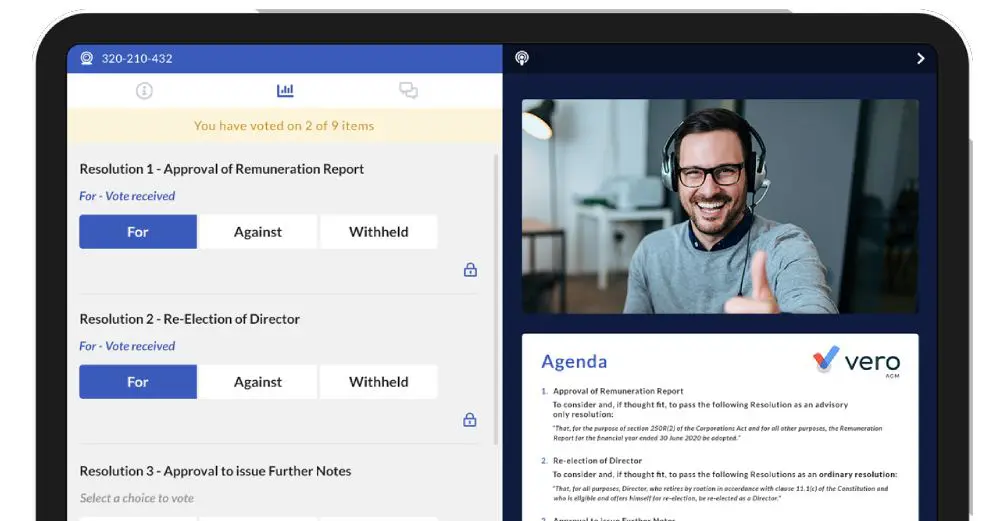
Hybrid and virtual AGMs have become normal across many sectors.
That is generally a positive development.
Members appreciate the flexibility, and organisations often see higher participation rates.
However, technology introduces its own risks.
Poor audio quality, unreliable internet connections, voting platform issues, unclear login instructions and inadequate support can all undermine the meeting experience.
ASIC’s guidance makes clear that members participating virtually should have a reasonable opportunity to engage, ask questions and participate in the meeting process. Virtual attendees should not be treated as second-class participants.
The organisations that run successful virtual or hybrid AGMs typically conduct testing beforehand, provide clear member instructions and have contingency plans available if something goes wrong.
Not Keeping Proper Records
Many AGM disputes emerge months after the meeting.
At that point, evidence matters.
Accurate records should include:
ASIC requires company resolutions and meeting records to be properly documented and maintained.
If a result is challenged later, good recordkeeping often becomes the difference between a straightforward explanation and a governance problem.
Running Elections Without Independent Oversight
Not every election requires an independent returning officer.
But where positions are contested, tensions exist within the membership, or the outcome may be closely scrutinised, independence becomes increasingly valuable.
Even when a result is entirely legitimate, members may question outcomes if the organisation manages every aspect internally.
Independent vote administration, scrutineering and electronic ballot systems help create confidence in the process and reduce perceptions of bias.
For many boards, that reassurance is worth far more than the administrative convenience of handling everything internally.
Common AGM Mistakes and How to Avoid Them
FAQ
Common AGM Mistakes and How to Avoid Them
Common AGM Mistakes and How to Avoid Them
What is the most common AGM mistake?
Failure to properly prepare the notice of meeting is one of the most common issues. Errors in resolutions, voting instructions, proxy information or notice periods can create governance risks and sometimes affect the validity of decisions.
Do proxies count towards quorum?
Sometimes yes, sometimes no.
The answer depends on the governing legislation, constitution and meeting rules that apply to the organisation. Proxy arrangements should always be checked against the relevant governing documents before the AGM.
Can AGMs be held online in Australia?
Yes. Many Australian organisations can hold virtual or hybrid meetings, subject to their governing legislation and constitutional requirements. Members must generally be given a reasonable opportunity to participate in the meeting.
What happens if quorum is not reached?
The outcome depends on the organisation’s governing rules and applicable legislation. In many cases, the meeting must be adjourned or reconvened according to procedures set out in the constitution or legislation.
Final Thoughts
Most AGM problems are not caused by bad governance. They are caused by assumptions, rushed preparation and unclear processes.
The organisations that consistently run smooth AGMs tend to focus on three things: preparation, transparency and member participation.
Whether that involves electronic voting, independent scrutineering, proxy management or hybrid meeting technology, the goal is always the same — making sure members can participate confidently and decisions can withstand scrutiny.
If your organisation is preparing for an upcoming AGM and wants guidance on voting processes, meeting technology or independent election management, the team at Vero Voting can help you plan a process that is both compliant and practical.
Sources
ASIC – Company Meetings and Resolutions: https://www.asic.gov.au/for-business-and-companies/companies/company-building-blocks/company-meetings-and-resolutions/
ASIC – FAQs: Virtual Meetings for Companies and Registered Schemes: https://www.asic.gov.au/regulatory-resources/corporate-governance/shareholder-engagement/faqs-virtual-meetings-for-companies-and-registered-schemes/
ASIC – Replaceable Rules for Company Governance: https://www.asic.gov.au/for-business/registering-a-company/steps-to-register-a-company/constitution-and-replaceable-rules/replaceable-rules-outlined/
ASIC – Shareholder Rights and Responsibilities: https://www.asic.gov.au/for-business-and-companies/companies/company-share-and-shareholder-rules-and-changes/shareholder-rights-and-responsibilities/
NSW Government – Meetings for Incorporated Associations: https://www.nsw.gov.au/business-and-economy/incorporated-associations/running-an-incorporated-association/meetings
Consumer Affairs Victoria – Incorporated Association Meetings: https://www.consumer.vic.gov.au/clubs-and-fundraising/incorporated-associations/running-an-incorporated-association/meetings
NT Government – Meetings for Incorporated Associations: https://nt.gov.au/industry/licences/incorporated-associations/running-an-incorporated-association/meetings-for-incorporated-associations
Office of the Registrar of Indigenous Corporations – AGM Problems and Solutions: https://www.oric.gov.au/for-corporations/meetings/general-meetings/agm-problems-and-solutions
Frequently Asked Questions
What is the most common AGM mistake?
Failure to properly prepare the notice of meeting is one of the most common issues. Errors in resolutions, voting instructions, proxy information or notice periods can create governance risks and sometimes affect the validity of decisions.
Do proxies count towards quorum?
Sometimes yes, sometimes no.
The answer depends on the governing legislation, constitution and meeting rules that apply to the organisation. Proxy arrangements should always be checked against the relevant governing documents before the AGM.
Can AGMs be held online in Australia?
Yes. Many Australian organisations can hold virtual or hybrid meetings, subject to their governing legislation and constitutional requirements. Members must generally be given a reasonable opportunity to participate in the meeting.
What happens if quorum is not reached?
The outcome depends on the organisation’s governing rules and applicable legislation. In many cases, the meeting must be adjourned or reconvened according to procedures set out in the constitution or legislation.