Common AGM Mistakes Australian Organisations Make and How to Avoid Them
Friday, 24 July 2026, 4:52 pm

Running an Annual General Meeting is one of those governance tasks that looks straightforward until something goes wrong. As someone who’s supported hundreds of AGMs across companies, not-for-profits, strata schemes, unions and associations, I’ve seen the same issues crop up time and again. Most aren’t caused by bad intent – they’re the result of tight timelines, outdated assumptions, or small oversights that snowball.
The good news? Nearly all of them are preventable with better planning and the right processes.
Why AGM Mistakes Matter More Than You Think
A flawed AGM doesn’t just create a stressful day. It can lead to disputed resolutions, challenges to election outcomes, regulator scrutiny, or loss of member trust. In some cases, it means repeating the whole process. For organisations already stretched thin, that’s time and money no one can afford.
Australian rules vary depending on your structure – Corporations Act for public companies, state-based rules for incorporated associations, specific strata legislation, and your own constitution or rules. Ignoring those differences is where many problems start.
The Most Common AGM Pitfalls
1. Leaving Planning Too Late
This tops the list for a reason. The financial year ends, reports need finalising, and suddenly the AGM date is breathing down your neck. Notices go out late, proxies aren’t properly managed, and the chair is still tweaking resolutions the night before.
What happens: Rushed notices with errors, frustrated members, and higher risk of procedural challenges.
Fix: Block out your timeline months in advance. Aim to have key documents like financial reports and candidate information ready well before the notice period kicks in.
2. Issues with the Notice of Meeting
Getting the notice wrong is one of the most common – and legally risky – mistakes. Late dispatch, missing required information, unclear details about hybrid or virtual participation, or failing to include special resolutions properly.
Notice periods differ: often 21 or 28 days for companies, but check your rules and legislation. For strata schemes in NSW, it’s at least 14 days for AGMs.
Practical tip: Use a checklist against your governing document. Include clear instructions on how members can participate, appoint proxies, and submit questions. Test any links or portals early.
3. Outdated Membership Data and Voting Entitlements
Using last year’s list is a recipe for disaster. Members move, resign, or have lapsed payments. Proxies get appointed for people who are no longer eligible.
This leads to arguments on the day about who can vote and disputes after the fact.
Better approach: Clean your membership database well in advance. Verify eligibility and have a clear process for handling disputes before the meeting starts.
4. Proxy and Quorum Problems
Mismanaging proxies – unclear forms, missed deadlines, or not verifying them properly – causes endless headaches. Quorum failures, especially in organisations with dispersed members, can derail proceedings entirely.
In hybrid setups, confirm how virtual attendance counts toward quorum under your rules.
5. Poor Technology Preparation for Hybrid or Virtual Meetings
Assuming the platform will “just work” is dangerous. Audio fails, voting doesn’t register, or remote members can’t ask questions effectively. ASIC emphasises that members must have a reasonable opportunity to participate.
Reality check: Always run a full dress rehearsal with your tech provider and test with real users if possible.
6. Unclear Voting Procedures and Manual Counting Risks
Failing to explain resolutions clearly, not stating voting thresholds, or relying on manual counts for large groups invites errors and challenges. Show-of-hands voting can also distort outcomes in share-based organisations.
7. Inadequate Record-Keeping and Follow-Up
Minutes that miss key decisions, unclear voting results, or forgetting to lodge required changes with regulators (like ACNC for charities or ASIC) create problems down the track.
Best Practices for a Smoother AGM
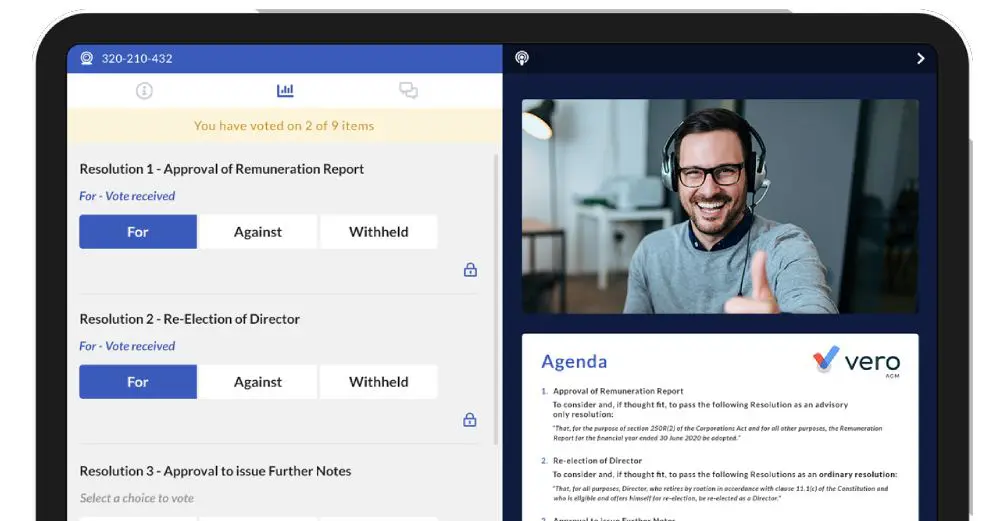
Electronic voting platforms, when done right, handle proxies, real-time participation, secure counting, and audit trails while reducing manual errors.
Where Tools Like Vero Voting Can Help
For many organisations, the complexity of modern AGMs – hybrid formats, large memberships, or the need for unquestionable integrity in elections – makes independent expertise valuable. Vero Voting supports compliant online voting, proxy management, and hybrid meeting technology tailored to Australian governance requirements. It takes the technical and administrative load off internal teams so they can focus on the substance of the meeting.
It’s not about replacing your processes – it’s about making sure they run reliably and transparently.
Key Takeaways
AGMs are a cornerstone of good governance, but they don’t have to be painful. Most mistakes stem from planning gaps rather than complex legal issues. Get the fundamentals right – timing, notice, membership accuracy, clear procedures, and reliable technology – and your meetings will build confidence rather than erode it.
Common AGM Mistakes Australian Organisations Make
Common AGM Mistakes Australian Organisations Make
FAQ
What is the most common AGM mistake organisations make? Leaving planning too late and issuing defective notices of meeting. These create a cascade of issues with proxies, quorum, and member participation.
Do all Australian organisations need to hold an AGM? No. Public companies generally do under the Corporations Act (within five months of financial year-end). Requirements for NFPs, incorporated associations, and strata schemes depend on their structure, state legislation, and governing rules. Check your specific obligations.
Can AGMs be held fully online in Australia? Hybrid meetings are widely permitted. Virtual-only meetings are allowed for companies where the constitution expressly permits it. Technology must give all members a reasonable opportunity to participate.
How do you handle low attendance or quorum issues? Plan an engaging agenda, give proper notice, and use hybrid options to boost participation. Know your quorum rules in advance and have contingency processes documented.
Should we use electronic voting for our AGM? For organisations with more than a handful of members or complex elections, yes. It improves accuracy, accessibility, auditability, and member trust while reducing administrative burden.
What should we do if something goes wrong during the AGM? Stay calm, document the issue clearly, and follow your rules for procedural decisions. For serious matters, seek advice promptly rather than proceeding if validity is in doubt.
Sources
Frequently Asked Questions
What is the most common AGM mistake organisations make?
Leaving planning too late and issuing defective notices of meeting. These create a cascade of issues with proxies, quorum, and member participation.
Do all Australian organisations need to hold an AGM?
No. Public companies generally do under the Corporations Act (within five months of financial year-end). Requirements for NFPs, incorporated associations, and strata schemes depend on their structure, state legislation, and governing rules. Check your specific obligations.
Can AGMs be held fully online in Australia?
Hybrid meetings are widely permitted. Virtual-only meetings are allowed for companies where the constitution expressly permits it. Technology must give all members a reasonable opportunity to participate.
How do you handle low attendance or quorum issues?
Plan an engaging agenda, give proper notice, and use hybrid options to boost participation. Know your quorum rules in advance and have contingency processes documented.
Should we use electronic voting for our AGM?
For organisations with more than a handful of members or complex elections, yes. It improves accuracy, accessibility, auditability, and member trust while reducing administrative burden.
What should we do if something goes wrong during the AGM?
Stay calm, document the issue clearly, and follow your rules for procedural decisions. For serious matters, seek advice promptly rather than proceeding if validity is in doubt.