Member Voting Systems for Associations
Monday, 22 June 2026, 12:54 pm

For most associations, voting is one of the most visible expressions of member democracy.
Whether members are electing a board, approving constitutional changes, voting on policy matters, or deciding the future direction of the organisation, confidence in the voting process matters. When members trust the process, they are more likely to accept the result—even when their preferred outcome doesn’t win.
Yet many associations still rely on voting systems that create unnecessary confusion, low participation, administrative burden, or disputes.
The right voting system is rarely about technology alone. It starts with governance.
Start With the Constitution
One of the most common mistakes associations make is assuming they can introduce a new voting method whenever they choose.
In reality, voting rights and voting procedures are usually governed by the association’s constitution and the legislation that applies in the relevant state or territory.
Before changing any voting process, committee members should review:
Many constitutions specify:
If the constitution is silent or outdated, legal advice may be appropriate before introducing new voting arrangements.
The Traditional Show of Hands
For decades, the show of hands was the default voting method at general meetings.
It remains useful for straightforward procedural motions where the outcome is obvious and the issue is unlikely to be contested.
The challenge is that a show of hands measures people physically present in the room rather than necessarily reflecting the full voting entitlement of the membership.
It can also create difficulties where:
For routine meeting business, a show of hands may still be appropriate. For significant decisions, many associations now prefer a more formal voting method.
Poll Voting Provides Greater Accuracy
A poll counts actual voting entitlements rather than simply counting raised hands.
This becomes particularly important where:
A properly managed poll provides a clear audit trail and a defensible result.
From a governance perspective, many experienced chairs will move directly to a poll when the matter is significant or potentially contentious.
Proxy Voting
Proxy voting allows a member to appoint another person to vote on their behalf.
For geographically dispersed associations, proxy voting has traditionally helped improve participation where members cannot attend a meeting.
However, proxy voting can create challenges.
Questions often arise around:
Associations that permit proxies should have clear procedures for validating, recording, and reporting proxy votes before the meeting begins.
Good governance requires transparency.
Members should understand exactly how proxy votes will be managed and counted.
Postal Voting
Postal voting remains an option for some associations, particularly where members have limited access to technology or where constitutional requirements still favour paper-based processes.
The advantages are familiar:
The downside is administration.
Postal voting often requires:
For larger associations, the administrative effort can become substantial.
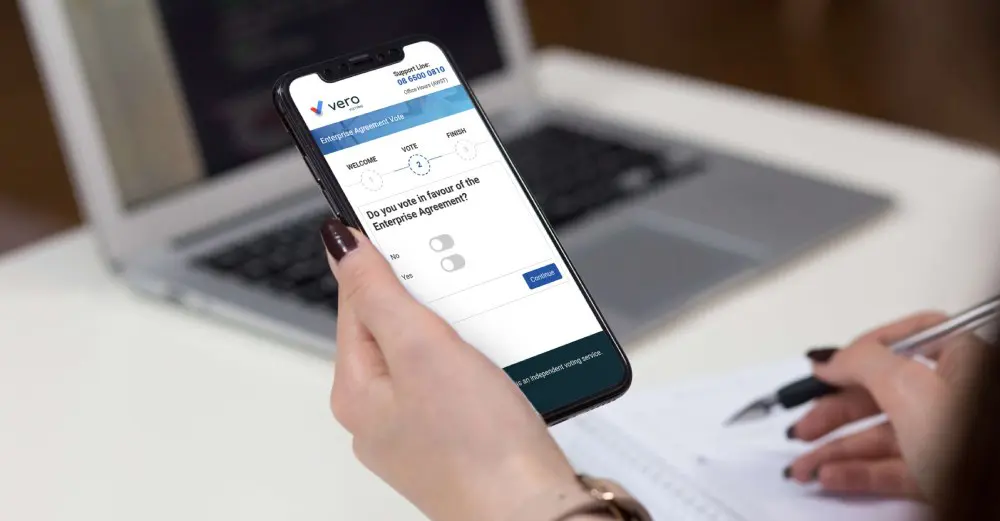
Electronic Voting Has Become Mainstream
Electronic voting is no longer a niche option.
Many Australian associations now use electronic voting for elections, AGMs, constitutional amendments, board appointments, and member resolutions.
When implemented correctly, electronic voting offers several practical advantages:
Electronic voting is particularly valuable for associations whose members are spread across multiple locations.
Instead of requiring attendance at a specific venue and time, members can participate from wherever they are.
That often leads to higher engagement and a result that better reflects the broader membership.
The key consideration is ensuring that electronic voting is authorised under the organisation’s governing rules and that appropriate controls are in place to verify voter eligibility and maintain ballot integrity.
Independent Vote Management
One issue that boards increasingly consider is independence.
Even when an election is conducted fairly, perceptions matter.
If committee members are administering their own election, members may question the process—even when there is no actual problem.
Using an independent returning officer or independent vote manager can help address concerns around:
This is particularly relevant where:
An independent process often provides reassurance to all parties involved.
Choosing the Right Voting System
There is no single voting method that suits every association.
A small local community association may operate effectively using in-person voting at meetings.
A national professional association with thousands of members will likely require electronic voting and independent oversight.
The best system is usually the one that balances:
Most importantly, members should understand the process before voting begins.
Confusion creates disputes. Clarity creates confidence.
Where Vero Voting Can Assist
For associations conducting elections, member ballots, AGM voting, or constitutional resolutions, technology can remove much of the administrative burden while maintaining strong governance controls.
Platforms such as Vero Voting can support secure electronic voting, proxy management, poll voting, independent vote administration, and scrutineering processes where required.
The objective is not simply to digitise voting. It is to make participation easier while preserving the integrity of the result.
Member Voting Systems
Member Voting Systems
Member Voting Systems
Frequently Asked Questions
Can an incorporated association use electronic voting?
In many jurisdictions, yes. However, the association’s constitution should authorise electronic voting or electronic ballots where required. The specific legislative requirements vary between states and territories.
Are proxy votes allowed in associations?
Only if the constitution permits them. Some constitutions allow proxy voting, while others prohibit it entirely or impose conditions on how proxies may be appointed and exercised.
What is the difference between a show of hands and a poll?
A show of hands generally counts those physically voting at the meeting, whereas a poll counts voting entitlements. Polls provide a more precise and auditable result.
When should an association use an independent vote manager?
Independent vote management is particularly useful for contested elections, constitutional amendments, sensitive member resolutions, or situations where transparency and member confidence are critical.
Can electronic voting increase member participation?
Many associations find that removing attendance barriers allows more members to participate, particularly where members are geographically dispersed or unable to attend meetings in person.
Final Thoughts
The strongest member voting systems are not necessarily the most complex. They are the systems that members understand, trust, and can access easily.
If your association is reviewing its election processes, AGM voting procedures, or member engagement strategy, the team at Vero Voting can help you assess the options and determine what approach best suits your organisation’s governance requirements.
Sources
NSW Government – Membership of Incorporated Associations: https://www.nsw.gov.au/business-and-economy/associations/membership-of-associations
NSW Government – Postal, Electronic or Combined Ballots: https://www.nsw.gov.au/business-and-economy/incorporated-associations/running-an-incorporated-association/postal-electronic-or-combined-ballots
NSW Government – Resolutions in Incorporated Associations: https://www.nsw.gov.au/business-and-economy/incorporated-associations/running-an-incorporated-association/resolutions
NSW Government – Meetings and Voting for Scheme Associations: https://www.nsw.gov.au/housing-and-construction/community-living/community-and-neighbourhood-schemes/association-responsibilities/meetings-and-voting
Corporations Act 2001 (Cth), Section 250J – Voting at Meetings of Members: https://www.legislation.gov.au/
Office of the Registrar of Indigenous Corporations – Resolutions and Voting at General Meetings and AGMs: https://www.oric.gov.au/for-corporations/meetings/general-meetings/resolutions-and-voting-general-meetings-and-agms
Frequently Asked Questions
Can an incorporated association use electronic voting?
In many jurisdictions, yes. However, the association’s constitution should authorise electronic voting or electronic ballots where required. The specific legislative requirements vary between states and territories.
Are proxy votes allowed in associations?
Only if the constitution permits them. Some constitutions allow proxy voting, while others prohibit it entirely or impose conditions on how proxies may be appointed and exercised.
What is the difference between a show of hands and a poll?
A show of hands generally counts those physically voting at the meeting, whereas a poll counts voting entitlements. Polls provide a more precise and auditable result.
When should an association use an independent vote manager?
Independent vote management is particularly useful for contested elections, constitutional amendments, sensitive member resolutions, or situations where transparency and member confidence are critical.
Can electronic voting increase member participation?
Many associations find that removing attendance barriers allows more members to participate, particularly where members are geographically dispersed or unable to attend meetings in person.