Proxy Voting Under the Corporations Act — What You Need to Know
Thursday, 9 April 2026, 7:33 am

Proxy Voting Under the Corporations Act — What You Need to Know
Proxy voting is a fundamental component of shareholder participation in Australian company meetings. The **Corporations Act 2001 (Cth)** sets out clear and enforceable rules governing how proxies are appointed, exercised, and managed. For companies conducting Annual General Meetings (AGMs) or other member meetings, strict compliance is essential to avoid disputes, invalid votes, or regulatory consequences.
In this guide, we break down the key legal requirements for proxy voting, explain whether proxies can be revoked, and outline how modern voting solutions—like those offered by Vero Voting—help ensure full compliance.
Key Corporations Act Sections Governing Proxy Voting
Several provisions of the Corporations Act are central to proxy voting:
Section 249L – Requires that notice of a meeting clearly informs members of their right to appoint a proxy
Section 249X – Establishes a member’s right to appoint a proxy (including multiple proxies in some cases)
Section 250A – Sets out how proxy votes must be exercised, particularly for listed companies
You can review these provisions directly via the Federal Register of Legislation:
https://www.legislation.gov.au/Details/C2024C00360
Corporations Act 2001
The Australian Securities and Investments Commission (ASIC) also provides guidance on meetings and member rights:
General Regulatory Guidance
https://asic.gov.au/regulatory-resources/find-a-document/regulatory-guides/rg-9-takeovers/
What Must Be Included in a Proxy Form?
Under the Corporations Act, proxy forms must contain specific information to be valid and compliant. This includes:
For listed companies, additional disclosure is required under section 250A, including how the proxy holder intends to vote undirected proxies.
Ensuring accuracy in proxy documentation is critical—errors or omissions can invalidate votes or expose the company to legal challenges.
Deadlines for Proxy Appointments
The Corporations Act sets strict deadlines for lodging proxy appointments:
Late proxy submissions are generally invalid unless the company constitution provides otherwise.
Can Proxy Votes Be Revoked?
Yes—proxy appointments can be revoked under certain conditions.
A proxy is automatically revoked if:
These principles are derived from general corporate law and supported by ASIC guidance on meeting procedures. Companies must have systems in place to accurately track and update proxy status to avoid counting invalid votes.
Online and Hybrid Meetings: Proxy Voting in a Digital Era
Recent reforms have modernised meeting requirements, allowing companies to hold **virtual or hybrid meetings** under the Corporations Act.
Key updates include:
See Treasury guidance on meeting reforms:
https://treasury.gov.au/publication/p2022-272041
These changes make digital proxy management essential for compliance and efficiency.
Penalties for Non-Compliance
Failure to comply with proxy voting requirements can result in:
Accurate handling of proxies is not just administrative—it is a legal obligation.
How Vero Voting Ensures Compliance
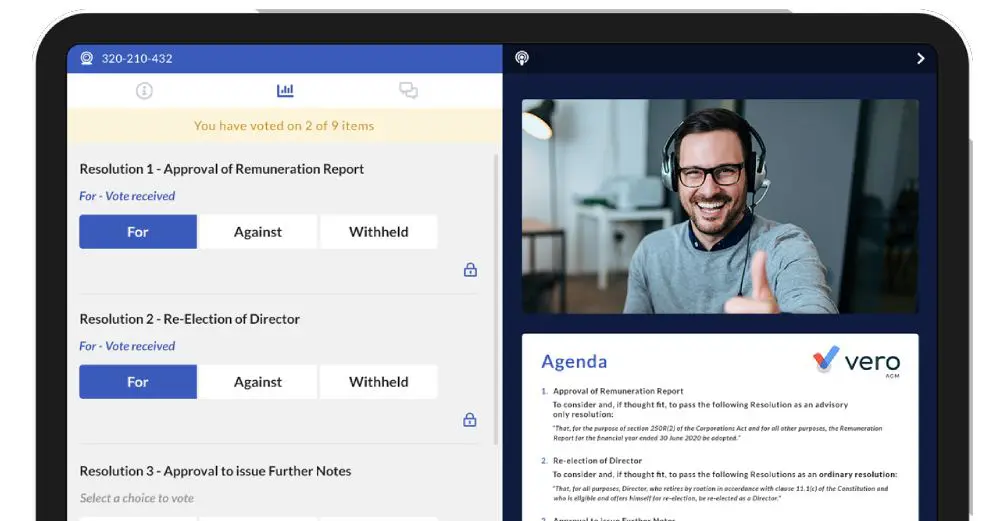
Managing proxy voting manually can be complex, particularly for large or hybrid meetings. Vero Voting simplifies this process by providing:
Our systems are designed specifically for Australian regulatory requirements, ensuring your AGM runs smoothly and lawfully.
Ensure Your AGM Proxy Process Is Fully Compliant
Proxy voting under the Corporations Act is highly regulated, with strict requirements around documentation, deadlines, and vote handling. Even minor errors can have significant legal and reputational consequences.
By partnering with Vero Voting, you can confidently manage your proxy process with accuracy, transparency, and full compliance.
If you’re preparing for an upcoming AGM or member meeting, now is the time to ensure your proxy voting framework is robust and compliant. Visit our contact page today to speak with our team about how we can support your next meeting.